Sugar is an essential ingredient in baking, responsible not only for sweetness but also for texture, color, and moisture. While the ubiquitous granulated white sugar is a staple in most kitchens, there is a diverse world of sugars out there that can dramatically influence the outcome of your baking projects. Understanding the nuances of different sugar types can elevate your baking creations from ordinary to extraordinary. This article delves into various sugar types, exploring their unique properties and how they can be utilized to enhance your baked goods.
Granulated White Sugar
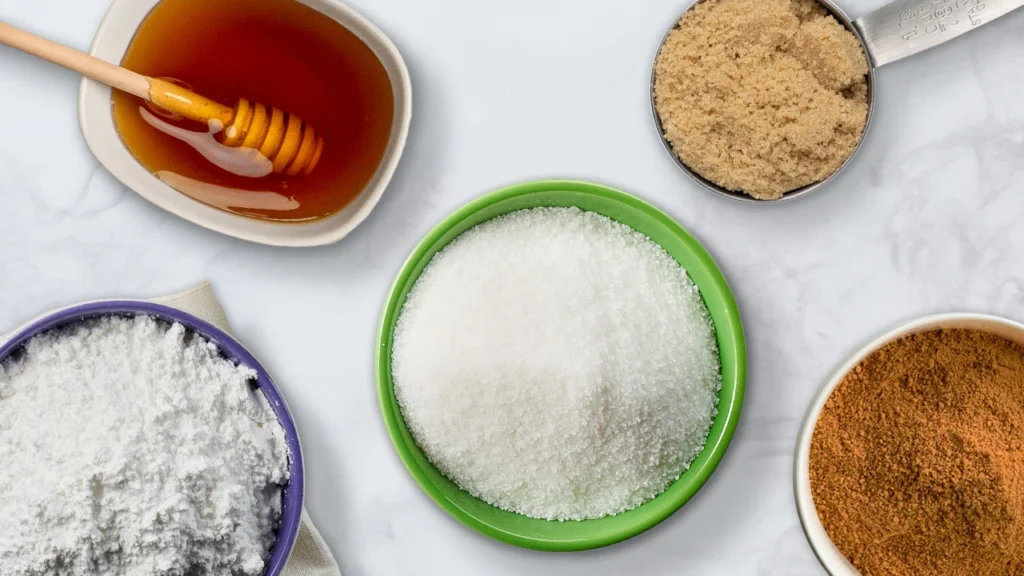
Granulated white sugar, often simply referred to as table sugar, is the most common type used in baking. It is made from sugarcane or sugar beet and refined to a pure, crystalline form. This sugar is versatile, dissolves quickly, and is ideal for a wide range of applications, from cookies and cakes to syrups and sauces. Its fine texture ensures even distribution in batters and doughs, contributing to the structure and tenderness of baked goods.
Uses in Baking
Granulated white sugar is perfect for recipes where a clean and straightforward sweetness is desired. It also aids in the creaming process, where sugar and butter are beaten together to incorporate air, resulting in a light and fluffy texture in cakes and cookies.
Confectioners’ Sugar
Confectioners’ sugar, also known as powdered sugar or icing sugar, is granulated sugar that has been finely ground and mixed with a small amount of cornstarch to prevent clumping. Its ultra-fine texture makes it ideal for icings, frostings, and dusting over baked goods for a decorative finish.
Uses in Baking
Confectioners’ sugar is used primarily in making smooth and creamy icings and buttercreams. Its ability to dissolve quickly without leaving a grainy texture makes it perfect for delicate pastries and meringues.
Brown Sugar
Brown sugar is essentially white sugar with molasses added back in, giving it a moist texture and a rich, caramel-like flavor. It comes in two varieties: light brown and dark brown, with the latter having a higher molasses content.
Uses in Baking
The moisture and acidity of brown sugar contribute to the texture and flavor of baked goods. It is excellent for recipes where a deeper, more complex sweetness is desired, such as in cookies, cakes, and sauces. Brown sugar also helps in retaining moisture, making it ideal for chewy cookies and soft cakes.
Turbinado and Demerara Sugar
Turbinado and Demerara sugars are minimally processed cane sugars, retaining more natural molasses than granulated sugar. They have large, coarse crystals and a light golden color.
Uses in Baking
These sugars are often used as a topping for baked goods, adding a pleasant crunch and a subtle molasses flavor. They are perfect for sprinkling on muffins, scones, or cookies just before baking.
Muscovado Sugar
Muscovado sugar is a less refined sugar with a high molasses content, giving it a moist texture and a robust flavor profile. It is available in light and dark varieties, similar to brown sugar.
Uses in Baking
Muscovado sugar’s intense molasses flavor makes it ideal for gingerbread, fruitcakes, and other rich, spiced desserts. Its moisture helps keep baked goods tender and flavorful.
Coconut Sugar
Coconut sugar is derived from the sap of the coconut palm tree and is minimally processed, retaining nutrients such as zinc, iron, and potassium. It has a subtle caramel flavor and a granular texture similar to brown sugar.
Uses in Baking
Coconut sugar can be used as a one-to-one substitute for granulated sugar in most recipes. Its unique flavor pairs well with chocolate and nut-based desserts, adding complexity to cookies, cakes, and brownies.
Honey, Maple Syrup, and Molasses
While not sugar in the traditional sense, honey, maple syrup, and molasses are natural sweeteners that can be used in baking to add unique flavors and moisture.
Uses in Baking
– **Honey**: A natural sweetener that adds a floral aroma and moisture to baked goods. It is great for bread, muffins, and granola.
– **Maple Syrup**: Offers a distinct maple flavor, perfect for pancakes, waffles, and cakes.
– **Molasses**: Provides a deep, rich flavor, commonly used in gingerbread, baked beans, and barbecue sauces.
Choosing the Right Sugar for Your Recipe
Selecting the appropriate sugar for your recipe involves considering the desired flavor, texture, and appearance of your final product. Here are a few tips to guide your choice:
1. **Flavor**: For a clean and straightforward sweetness, granulated white sugar is your best bet. For complex flavors, consider brown sugar, muscovado, or coconut sugar.
2. **Moisture and Texture**: If you want a moist and chewy texture, brown sugar or muscovado sugar is ideal. For a crunchy topping, opt for turbinado or Demerara sugar.
3. **Color and Appearance**: For a light and delicate appearance, use confectioners’ sugar. For a rustic look, consider using raw sugars like turbinado.
Experimenting with Sugar Types
Don’t be afraid to experiment with different sugar types in your baking. Substituting one sugar for another can transform the flavor and texture of your baked goods. Keep in mind that each type of sugar interacts differently with other ingredients, so adjustments in moisture and baking time may be necessary.
Conclusion
Understanding the diverse world of sugars and their unique characteristics can significantly enhance your baking endeavors. From the simple sweetness of granulated white sugar to the rich complexity of muscovado, each type brings something special to the table. By choosing the right sugar for your recipe, you can elevate the flavor, texture, and appearance of your creations, turning ordinary baked goods into extraordinary culinary delights. So, next time you embark on a baking adventure, explore the variety of sugars available and let your creativity shine.