When it comes to baking cakes, one of the most debated topics among bakers is whether to use butter or oil as the primary fat ingredient. Both have their champions, and both bring unique qualities to the table. In this article, we’ll explore the differences between butter and oil in cake baking, their effects on flavor and texture, and which might be superior depending on your baking goals.
The Basics: Butter and Oil
Butter
Butter is a dairy product made by churning cream. It consists mostly of fat but also contains water and milk solids. The fat content of butter is about 80%, which contributes to its rich flavor and creamy texture. Butter is known for its ability to impart a distinct, rich flavor to baked goods. In addition, it plays a crucial role in the creaming method, where butter and sugar are beaten together to create a light and airy texture in cakes.
Oil
Oil, on the other hand, is a plant-based fat that is liquid at room temperature. Common oils used in baking include vegetable oil, canola oil, olive oil, and coconut oil. Unlike butter, oil is 100% fat and does not contain water or milk solids. This pure fat content means oil can contribute to a moist texture in cakes, as it can coat flour proteins more thoroughly than butter, leading to less gluten formation and a tender crumb.
Flavor: The Taste Factor
Butter’s Richness
Butter is well-loved for its distinctive, rich flavor. It can elevate the taste of a cake, adding a subtle hint of creaminess that is particularly desirable in cakes like pound cakes, butter cakes, and some traditional sponge cakes. The milk solids in butter also undergo the Maillard reaction during baking, contributing to the golden-brown color and slightly nutty flavor in the cake crust.
Oil’s Neutral Profile
Oil, being neutral in flavor, does not contribute much to the taste of the cake. However, this can be advantageous in recipes where the focus is on other flavors, such as chocolate, vanilla, or spices. The neutrality of oils like vegetable or canola oil allows the primary flavors of the cake to shine through without interference from the fat source.
Texture: Moisture and Tenderness
Moistness with Oil
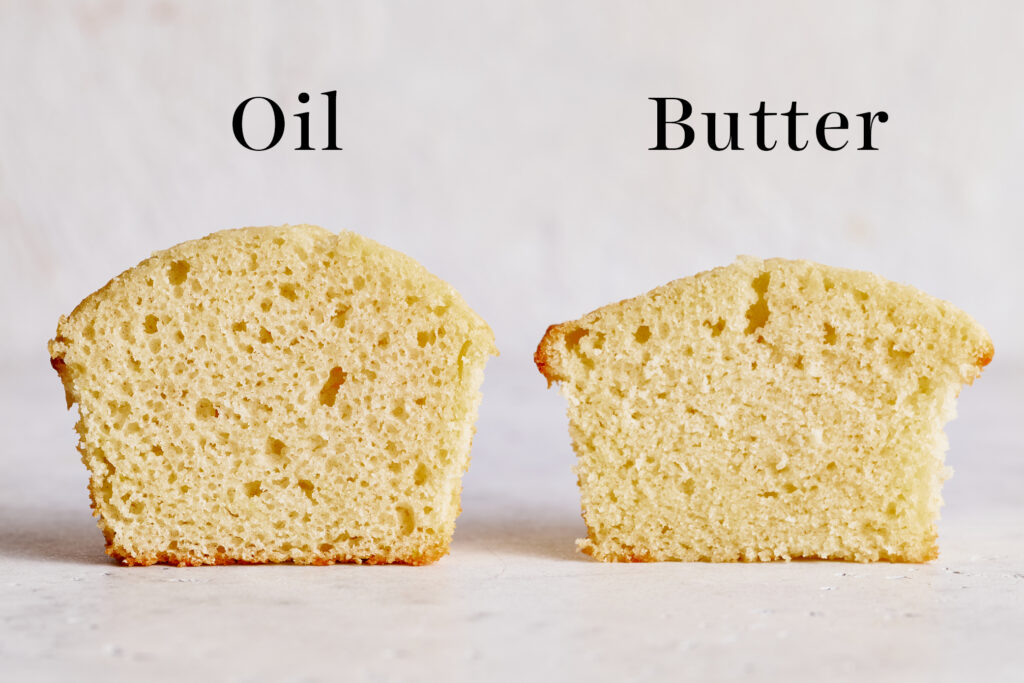
One of the significant advantages of using oil in cakes is the moisture it imparts. Because oil is 100% fat, it is more effective in coating flour proteins, thus inhibiting gluten development. This results in a cake with a moist, tender crumb. Oil-based cakes tend to stay moist longer than those made with butter, making them ideal for cakes that need to be baked in advance or will be served over several days.
Butter’s Lightness
While butter may not contribute the same level of moisture as oil, it is excellent for creating a light, fluffy texture in cakes when used in the creaming method. Beating butter with sugar incorporates air into the mixture, which, in turn, helps leaven the cake. This results in a lighter cake with a fine crumb structure, perfect for layer cakes and elaborate desserts.
Health Considerations
Butter’s Nutritional Profile
Butter contains saturated fats and cholesterol, which some health guidelines recommend consuming in moderation. However, it also contains vitamins such as A, D, E, and K, and when sourced from grass-fed cows, it includes healthy fats like conjugated linoleic acid (CLA) and omega-3 fatty acids.
Oil’s Health Benefits
Oils, particularly those derived from plants, often contain unsaturated fats, which are considered healthier for the heart. Oils like olive oil and canola oil are rich in monounsaturated fats, which can help reduce bad cholesterol levels. Furthermore, certain oils, like olive oil, contain antioxidants and anti-inflammatory properties.
Versatility and Stability
Baking with Butter
Butter provides versatility in baking, as it can be used in various forms—melted, softened, or cold—each adding different characteristics to the cake. However, butter can be less stable in high-temperature environments, which might lead to inconsistent results in some recipes.
Oil’s Consistency
Oil remains liquid at room temperature and is more stable at high temperatures, making it an ideal choice for recipes that require a consistent fat throughout the baking process. This stability can lead to more predictable results, especially in recipes where moisture is crucial.
Practical Considerations
Storage and Shelf Life
Oil generally has a longer shelf life than butter and does not require refrigeration. This can be a practical advantage for bakers who need to store ingredients for extended periods. Butter, on the other hand, should be refrigerated and used within its expiration date to avoid spoilage.
Cost Implications
Cost can also be a factor when deciding between butter and oil. Depending on geographic location and brand, butter often costs more than vegetable oils. For budget-conscious bakers, this might influence the decision, especially when baking in large quantities.
Conclusion: Which is Superior?
The superiority of butter or oil in cake baking ultimately depends on the desired outcome. For those seeking rich flavor and a light, airy texture, butter is likely the better choice. However, for a moist, tender cake with a neutral flavor profile, oil may be the superior option. In some cases, a combination of both might even be used to achieve a balance of flavor and texture.
Ultimately, the decision between butter and oil comes down to personal preference, the specific recipe, and the occasion for which the cake is being baked. Both ingredients have their merits, and understanding their properties allows bakers to make informed choices to create the perfect cake for any occasion.