In the world of baking, a beautifully frosted cake is often the pièce de résistance of any dessert table. Achieving a smooth, flawless cake frosting may seem like a daunting task, but with the right techniques and a little practice, anyone can master the art. This article will guide you through expert tips and tricks to achieve a perfectly smooth cake frosting, elevating your baking skills to a professional level.
Understanding the Basics
Choosing the Right Frosting
The first step in achieving smooth cake frosting is selecting the appropriate type of frosting. Buttercream is a popular choice due to its versatility and ease of use. Swiss meringue buttercream, American buttercream, and Italian meringue buttercream are all excellent options, each with its unique texture and flavor profile. For a more stable and less sweet option, consider using ganache or fondant.
Preparing Your Cake
Before you even think about frosting, it’s crucial to prepare your cake properly. Start by leveling the cake layers to ensure an even surface. Use a serrated knife or a cake leveler for precision. Once leveled, chill the cake layers in the refrigerator for at least 30 minutes. Chilled cakes are easier to handle and less prone to crumbling, making the frosting process smoother.
The Essential Tools
Having the right tools on hand is vital for achieving a smooth finish on your cake. Here are some must-have tools for cake frosting:
- Offset Spatula: A small and a large offset spatula will help you spread the frosting evenly across the cake’s surface and sides.
- Bench Scraper: This tool is essential for smoothing the sides of your cake. It provides a flat, even edge that helps achieve a flawless finish.
- Turntable: A cake turntable allows you to spin the cake while frosting, ensuring an even application.
- Piping Bag and Tips: For detailed work, a piping bag with various tips can help with intricate designs and borders.
Step-by-Step Frosting Technique
Crumb Coating
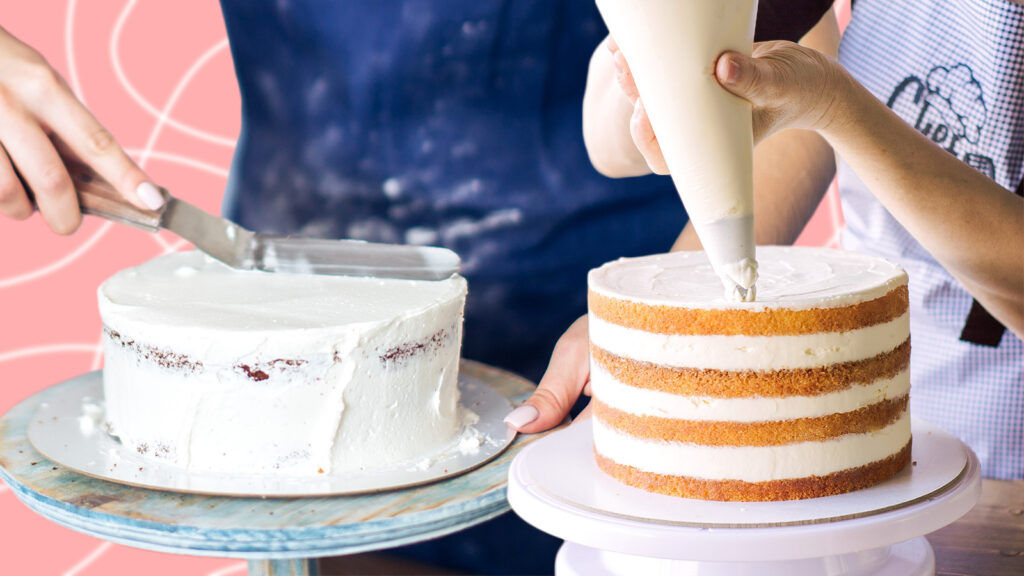
The first layer of frosting is known as the crumb coat. It acts as a base layer that seals in any loose crumbs and provides a smooth surface for the final layer of frosting. To apply the crumb coat, place a dollop of frosting on top of the cake and spread it using an offset spatula. Work your way from the top to the sides, applying a thin layer of frosting. Once complete, refrigerate the cake for 15-30 minutes to set the crumb coat.
Applying the Final Coat
After the crumb coat has set, it’s time to apply the final layer of frosting. Start by adding a generous amount of frosting on top of the cake and spread it evenly across the surface. Next, work your way down the sides, using the offset spatula to apply an even layer. The key is to apply more frosting than needed initially, as this will make it easier to achieve a smooth finish when you scrape off the excess.
Smoothing the Frosting
This is where the bench scraper and turntable come into play. Hold the bench scraper at a slight angle against the side of the cake. As you slowly rotate the turntable, gently scrape off the excess frosting. Repeat this process until the sides are smooth. For the top, use the offset spatula to smooth out any imperfections, starting from the edges and working towards the center.
Advanced Techniques for a Flawless Finish
Hot Water Method
For an ultra-smooth finish, try the hot water method. Dip your offset spatula or bench scraper into hot water, then quickly dry it with a clean towel. The residual heat will soften the frosting slightly, allowing you to smooth out any remaining imperfections. This technique is particularly useful for achieving a mirror-like finish with buttercream.
Using a Paper Towel or Parchment Paper
Once the frosting has set slightly, you can use a paper towel or parchment paper to achieve a smooth texture. Lay the paper over the frosting and gently press with your hands, smoothing out any imperfections. Be careful not to press too hard, as this can disrupt the frosting underneath.
Common Mistakes and How to Avoid Them
Overworking the Frosting
One common mistake is overworking the frosting, which can lead to a grainy texture. To avoid this, work quickly and efficiently, and be mindful of the temperature. If the frosting becomes too soft, refrigerate it for a few minutes before continuing.
Not Leveling the Cake
Skipping the step of leveling the cake can result in an uneven surface, making it difficult to achieve a smooth finish. Always ensure that your cake layers are level before you begin frosting.
Rushing the Process
Patience is key when it comes to cake frosting. Rushing through the process can lead to mistakes and a less-than-perfect finish. Take your time with each step, allowing the frosting to set between layers if necessary.
Conclusion
Mastering smooth cake frosting is a skill that requires practice, patience, and the right techniques. By choosing the appropriate frosting, preparing your cake properly, and using the right tools, you can achieve a professional-looking finish. Remember to take your time and enjoy the process, and soon you’ll be creating stunning cakes that are as beautiful as they are delicious.
With these expert tips revealed, you’re now equipped to tackle any cake frosting challenge with confidence. Happy baking!